
Bose Custom Columnar Docking Augment
Simplifying complex revision acetabular defects
The Bose augment turns a challenging revision acetabular case into a primary-type total hip replacement. Our patented Custom Columnar Docking technology achieves extended rigid fixation in narrow columnar corridors, using locking screws through plane-reorientation "dog-ears" placed in custom locations. Docking gives a divergent, clamp-like multiplanar construct — improving reliability and long-term success.
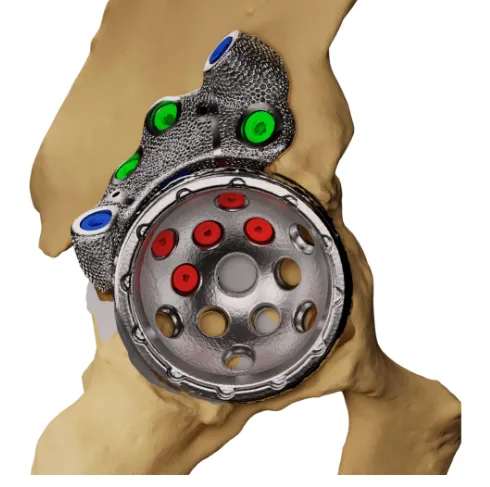
Engineered around the patient's anatomy
Precise fit
Matches the defect precisely and self-locks, saving crucial OR time and suiting even small patients.
Surgical ease
Seamless execution of the pre-op plan, with dedicated k-wire holes for provisional fixation.
Patient safety
Screw holes made for the patient's own bone corridors, with lengths given pre-op, keeping screws clear of critical structures.
Stability and rigidity
CCD screws work with dome and compression screws for 3D stability, significantly reducing the risk of loosening.
Versatile compatibility
Works with any highly porous titanium cementless cup; bone cement unitises cup to augment.
This implant in theatre
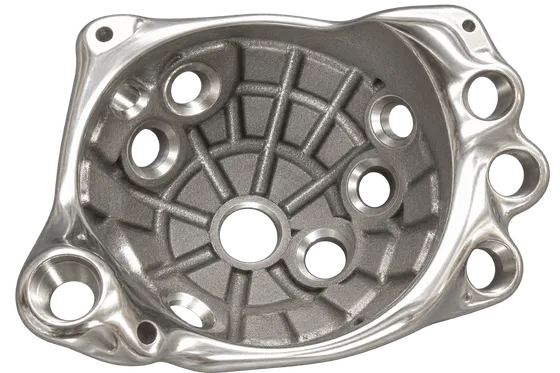 Revision hip
Complex Hip Revision with Severe Acetabular Bone Loss Using Patient-Specific FTL Cup
Multi-flange fixation for a deficient acetabulum
Read the case →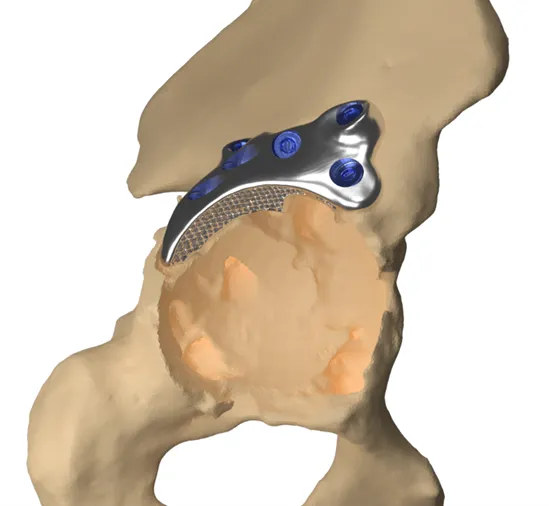 Hip
HipAdvancing Precision in Revision Hip Replacement
Custom hip columnar docking with divergent locking augment for a dislocated acetabular cup
Read the case →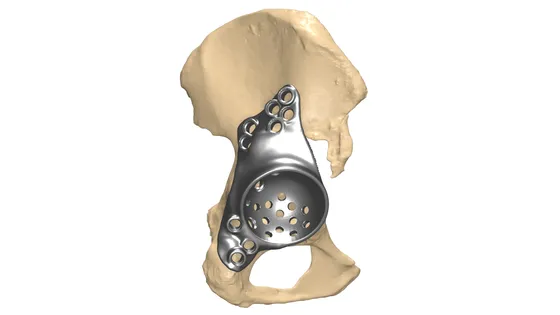 Revision hip
Custom Revision Hip Biflange Implant
Mirrored cage implant covering the acetabular defect after failed arthroplasty
Read the case →Reference Documents
Bose CCD Augment brochure
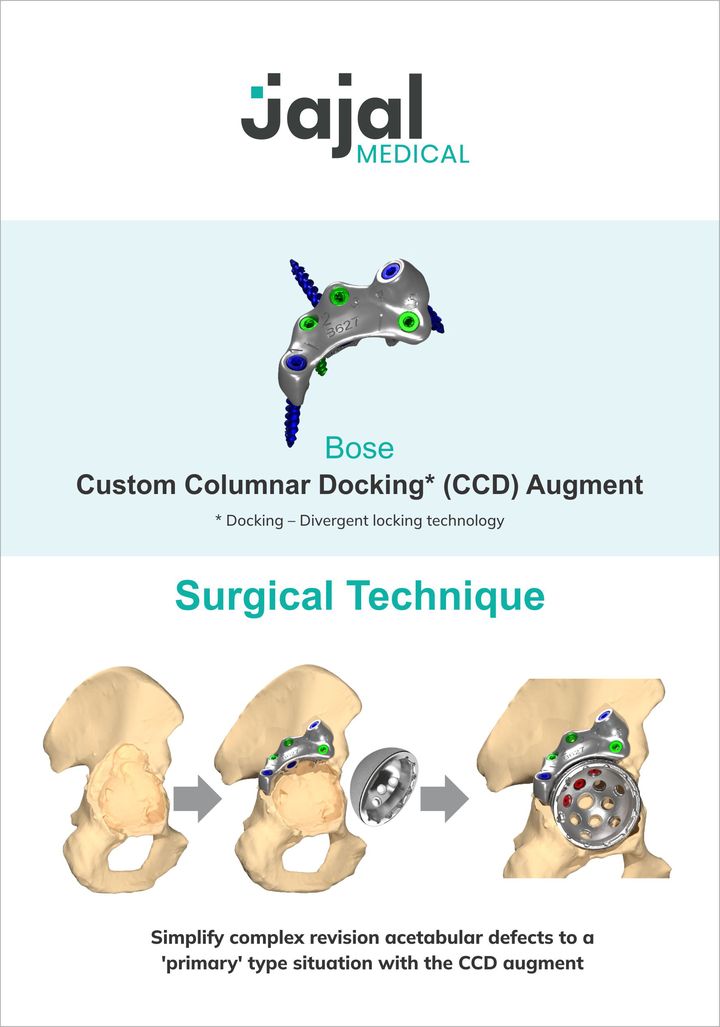
Custom Columnar Docking (CCD) Augment — divergent locking technology that simplifies complex revision acetabular defects into a "primary" type situation.
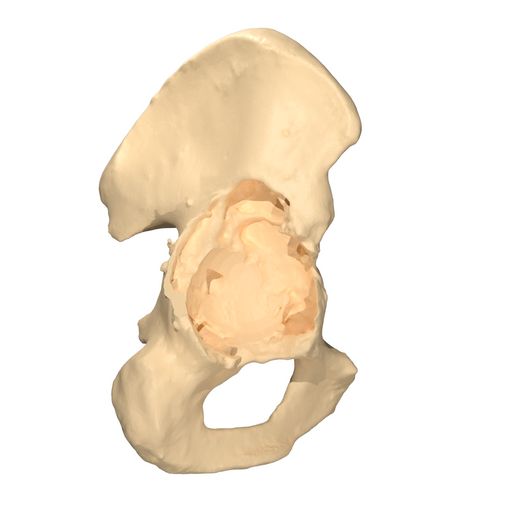
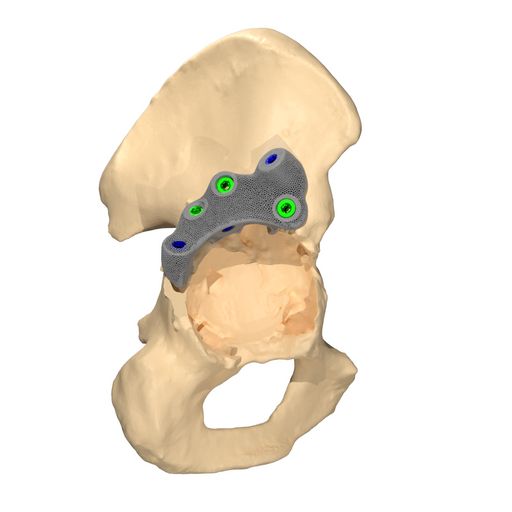
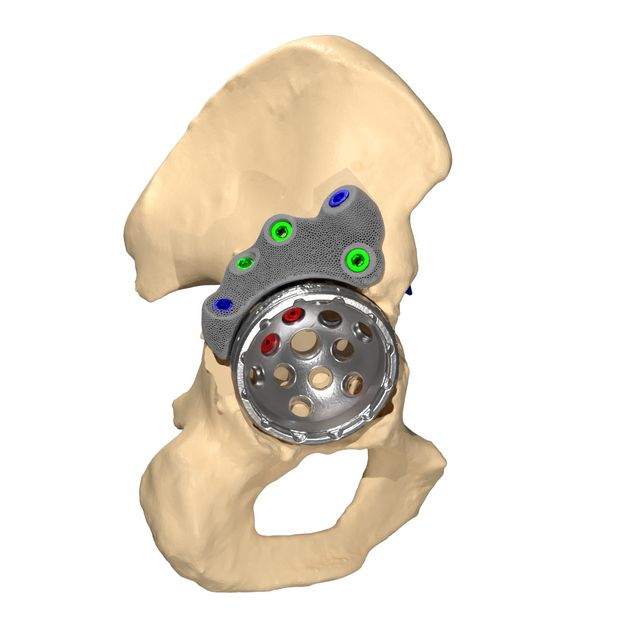
Innovative docking (CCD) technology
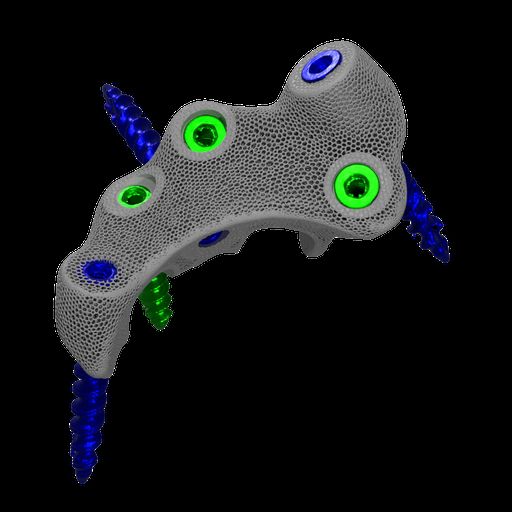
The patented Custom Columnar Docking technology is a novel concept for extended rigid fixation in narrow columnar corridors, using locking screws through plane-reorientation "dog-ears" in custom locations. Divergent locking in columnar bone docks the augment in a multiplanar matrix like a marine anchor, eliminating micromotion and enhancing success.
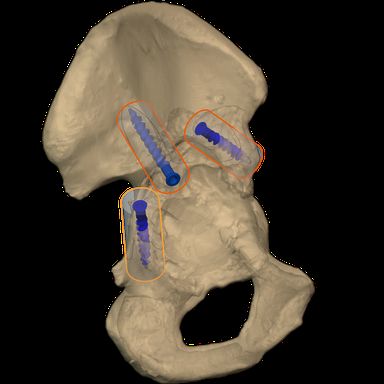
The challenge with current augments
- Prolonged OR time and difficulty fitting the augment to the bone defect.
- Non-rigid, tenuous constructs from uniplanar fixation, with screw locations that do not match areas of good bone stock.
- May require removal of critical bone to fit the augment.
- Sizes may not fit smaller patients, especially in Asia.
World's first 3D stability augment
Three types of screw, each with a distinct role in providing 3D stability:
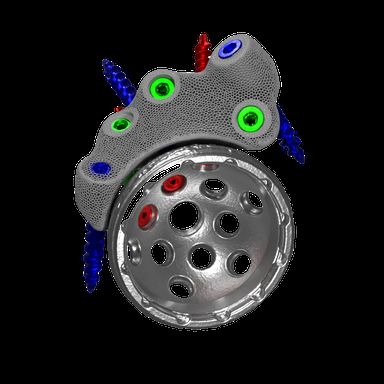
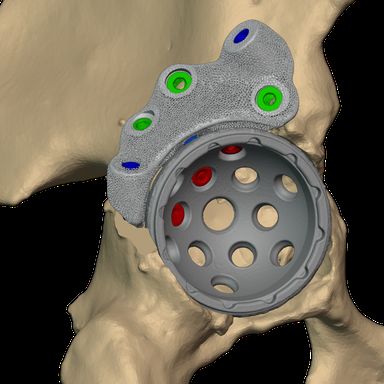
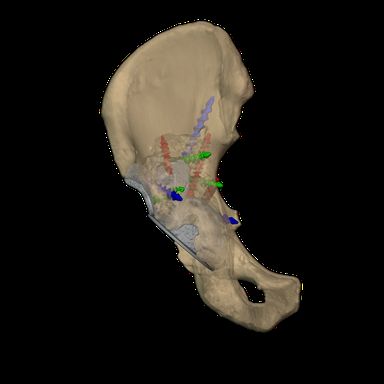
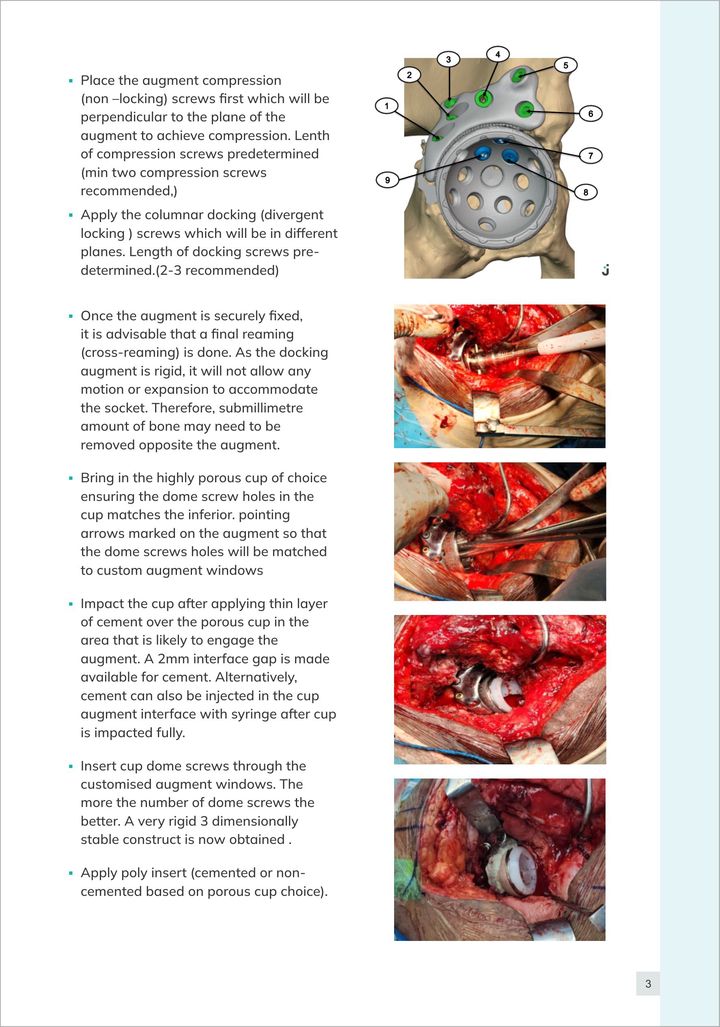
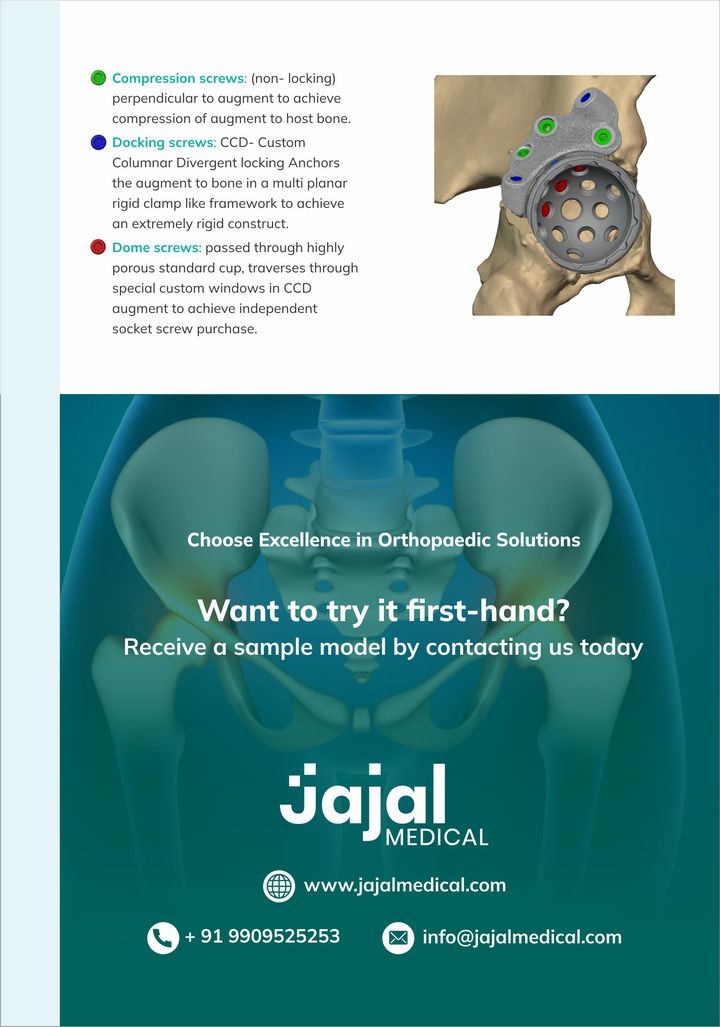
- Compression screws (non-locking) — perpendicular to the augment, compressing it to host bone.
- Docking screws — CCD custom columnar divergent locking anchors the augment to bone in a multiplanar, clamp-like framework for an extremely rigid construct.
- Dome screws — passed through the highly porous standard cup and through special custom windows in the CCD augment for independent socket screw purchase.
Key advantages for surgeons and patients
- Precise fit — matches the defect precisely and self-locks, saving crucial OR time; suitable even for small patients.
- Surgical ease — seamless execution of the pre-op plan, with dedicated k-wire holes for provisional fixation.
- Patient safety — screw holes custom-made for bone corridors and screw lengths supplied pre-op, keeping screws away from critical structures.
- Unmatched stability — CCD screws work with dome and compression screws for 3D stability, reducing the risk of loosening.
- Versatile compatibility — compatible with any highly porous titanium cementless cup; bone cement unitises cup to augment.
- Best possible screw purchase — longer, divergent locking screws through narrow columnar corridors give a clamped construct.
- Enhanced osteointegration — construct rigidity plus a proprietary lattice structure for rapid osteointegration.
- Tailored low profile — the lowest possible profile for the situation, with custom windows so dome screws can access bone.
- Cost saving — significant reduction in OR time.
- Long-term success — patient-matched implant with 3D stability. Ideal for all Paprosky type 2 and 3 defects; not suitable for pelvic discontinuity.
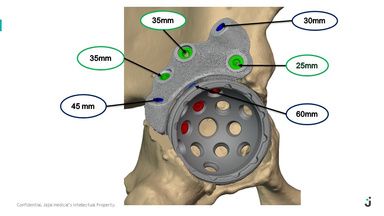
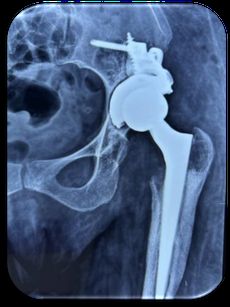
How a case runs
- CT scan of the patient at 1 mm slice thickness is uploaded — our software handles metal artefacts from existing implants, so scan the patient with the implant in place.
- Patient-specific CCD augment specifications are sent for surgeon approval.
- The CCD augment and surgical details arrive within a short period, together with a small bone model sterilised for intra-op use.
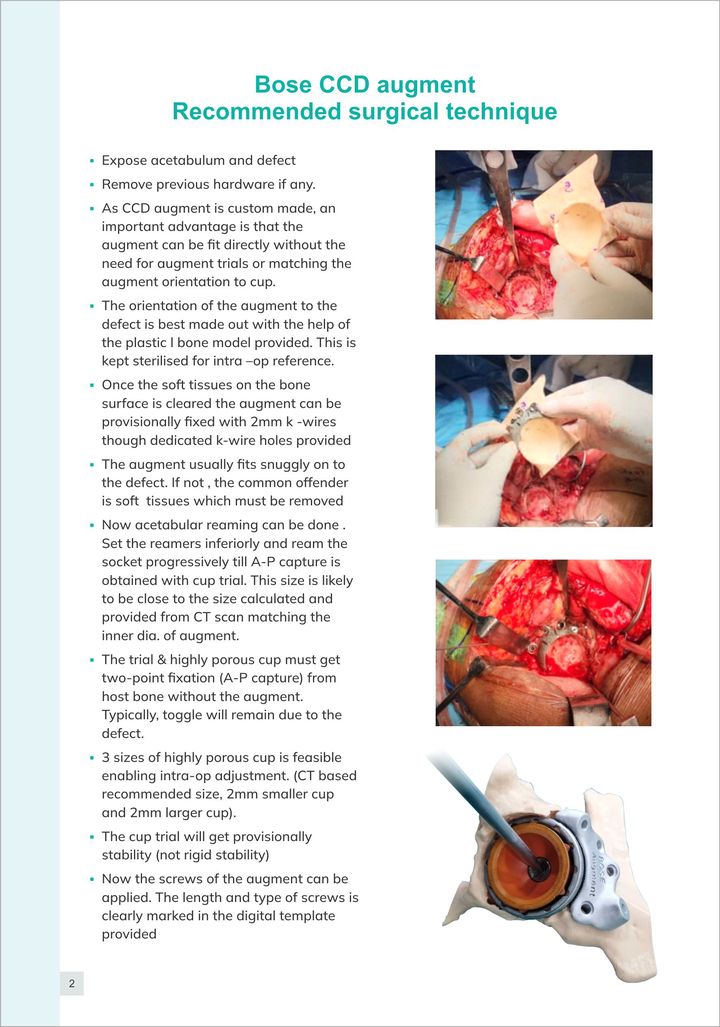
Bose Augment surgical technique
Planning a case? Send us the CT.
Send an anonymised scan and get your first 3D visualisation back within 24 hours.