
Custom Sternum Implant
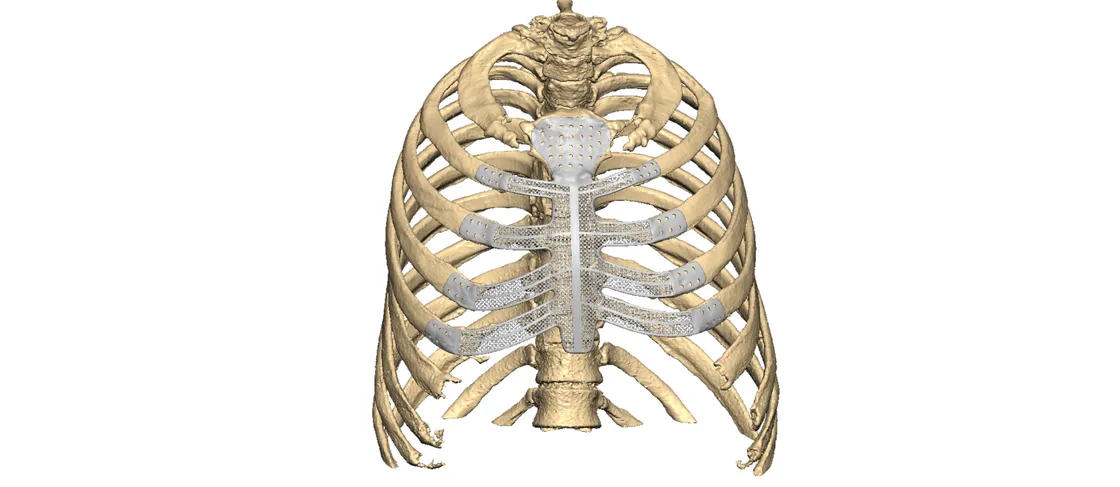
Single-component sternum-ribs titanium implant after subtotal sternectomy for a sternal tumour
Case information
Primary malignant or metastatic sternal tumours are uncommon. A subtotal or total sternectomy can offer a radical form of treatment; the issue is to restore the structural integrity of the chest wall.
This case involved a 43-year-old male patient affected with a sternal tumour. The manubrium through to the xiphoid process was affected and needed to be replaced by a customised sternum implant similar in shape to the actual anatomy, with the required strength and weight, in medical-grade titanium.
Dr. Arvind Kumar approached our clinical engineers for a robust plan and precise reconstruction of a patient-specific implant. We mapped out to visualise, plan, and then execute.
Visualisation
To visualise the sternum anatomy and its neighbouring area, a high-resolution CT scan of adequate slice thickness and increment was used to 3D model the defect.
The region of interest was well captured in the scan and replicated as a 1:1 digital model for understanding the sternal tumour — a self-explanatory model helping surgeons visualise the defect that usually remains hidden in conventional 2D CT images.
Planning
Once the 3D modelling of the images was completed, the plan was to lay down the removal of the tumour followed by reconstruction using a customised sternum implant.
- Tumour treated with subtotal sternectomy — resection of the sternal body with the adjacent sternocostal cartilage
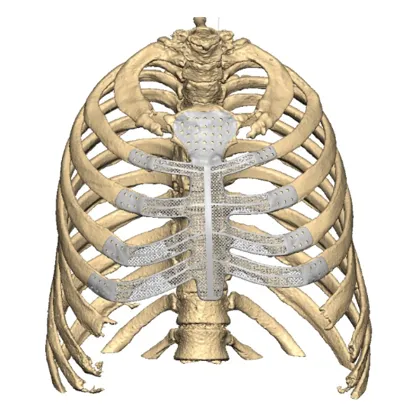
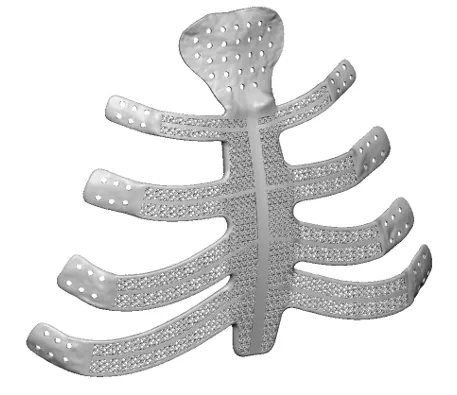
- Keeping a similar shape of sternum and rib part, with pre-designed holes at patient-specific flanges for fixation to healthy bone via suturing and screws
- A single-component sternum-ribs implant with four bilateral ribs connected to the sternum
- Porous structures provided to reduce weight while ensuring adequate strength
3D printing
Once the surgical plan was approved and finalised, it was translated into physical models to analyse the outcome. Pre-op, intermediate and post-op models were printed, and the customised implant was printed in medical-grade titanium.
Conclusion
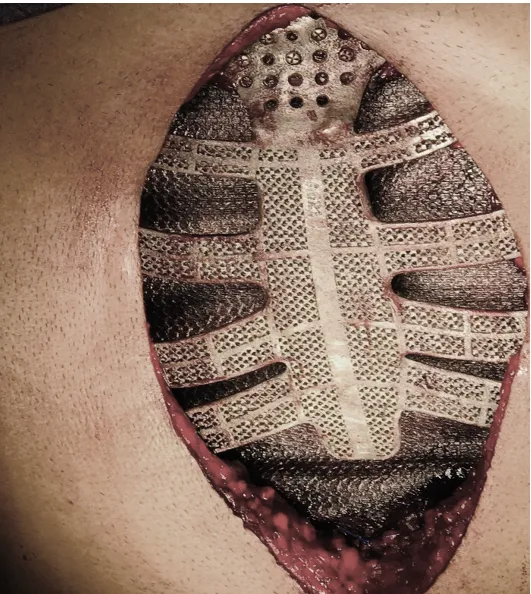
Pre-planning the surgical approach and using customised surgical guides and a patient-specific implant helped achieve accurate reconstruction, reduced intra-operative time and faster recovery of the patient.
Related cases
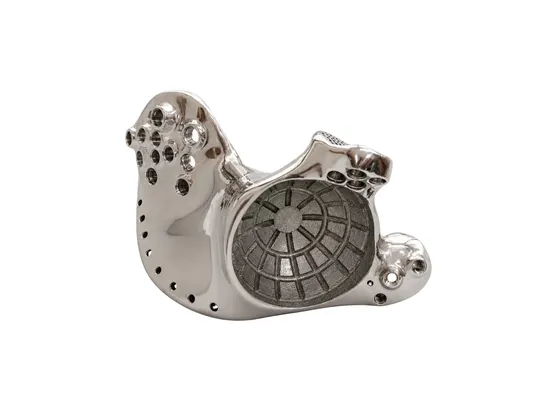 Oncology
Patient-Specific 3D Printed Hemipelvic Reconstruction with Constrained THA
Type I + II internal hemipelvectomy for Ewing's sarcoma
Read the case →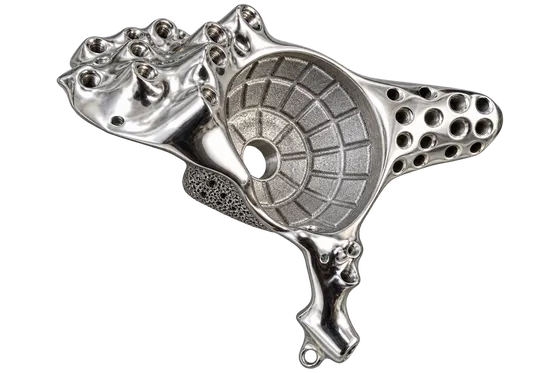 Pelvis
Pelvic Tumour Reconstruction Using Patient-Specific FTL Cup for Acetabular and Ischial Involvement
Planned resection, patient-specific jigs and custom fixation
Read the case →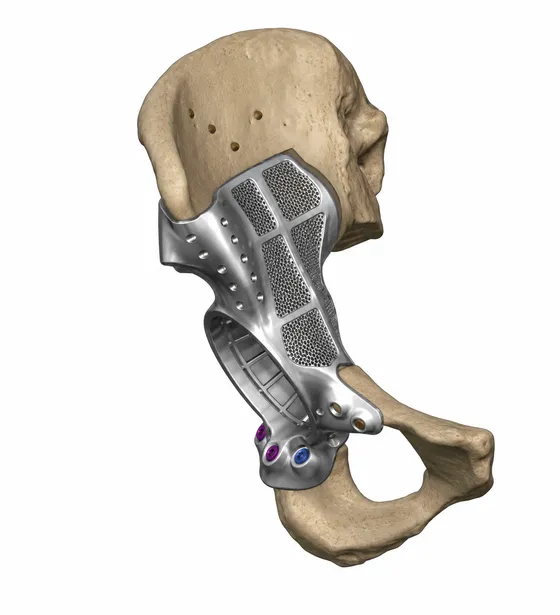 Oncology
Patient-specific FTL Cup for Tumor Resection and Acetabular Reconstruction
Pelvic tumour resection with cutting guides and a custom FTL cup
Read the case →Have a case like this?
Send the imaging and the clinical question — first 3D visualisation back within 24 hours.