
Custom ReGlen Implant for Complex Glenoid Reconstruction
Revision after failed shoulder arthroplasty with severe glenoid bone loss
Patient overview
The patient presented with a history of multiple prior shoulder surgeries. Following a traumatic event, the existing shoulder implant failed, resulting in severe glenoid bone loss.
Due to the extent of bone deficiency, standard off-the-shelf revision solutions were not suitable for achieving stable fixation or anatomical reconstruction. A patient-specific custom ReGlen implant was recommended to reconstruct the glenoid and enable revision arthroplasty.
Surgical planning
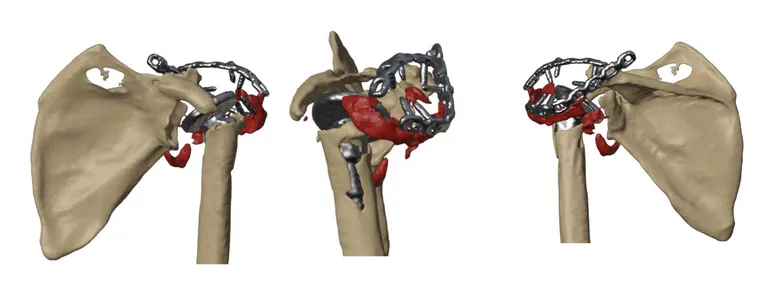
In close collaboration with the operating surgeon, the Jajal Medical 3D design team carried out a detailed digital preoperative planning workflow. CT-based 3D segmentation of the scapula and residual glenoid anatomy was performed.
The extent of bone loss and available bone stock were analysed to determine optimal implant geometry, and the fixation strategy was planned around zones of maximum bone purchase.
Implant design and manufacturing
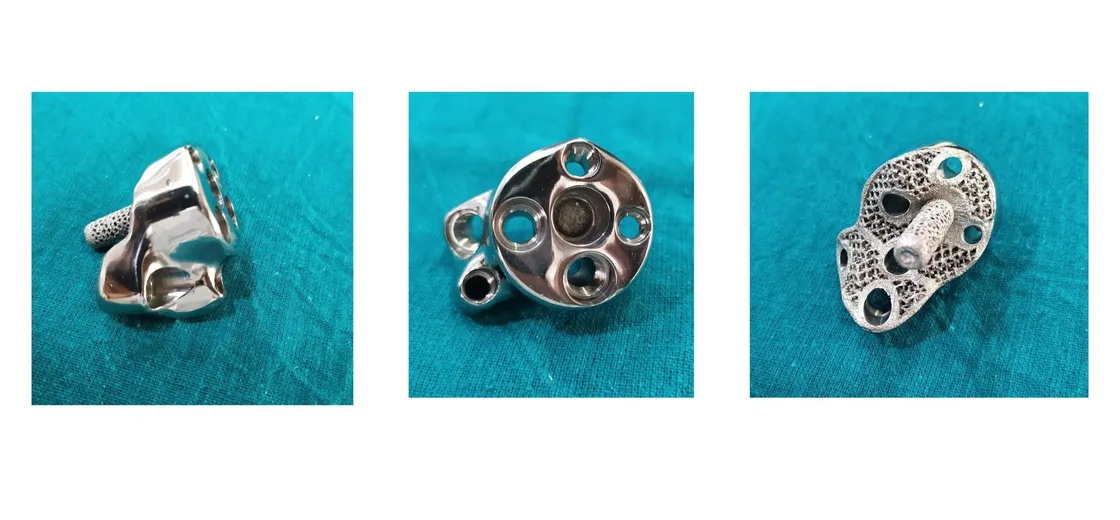
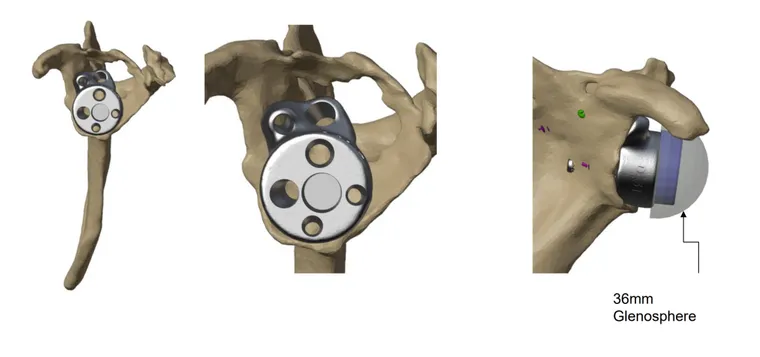
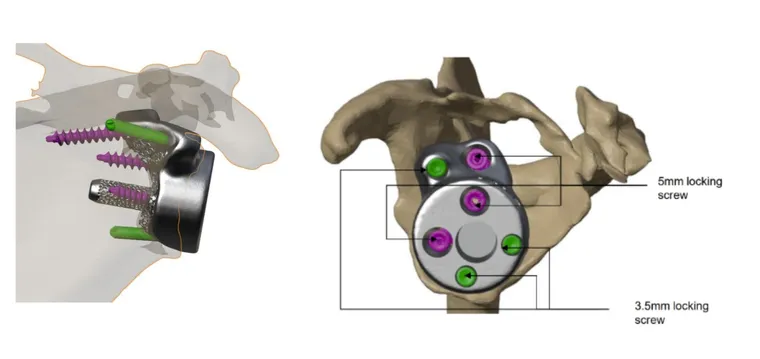
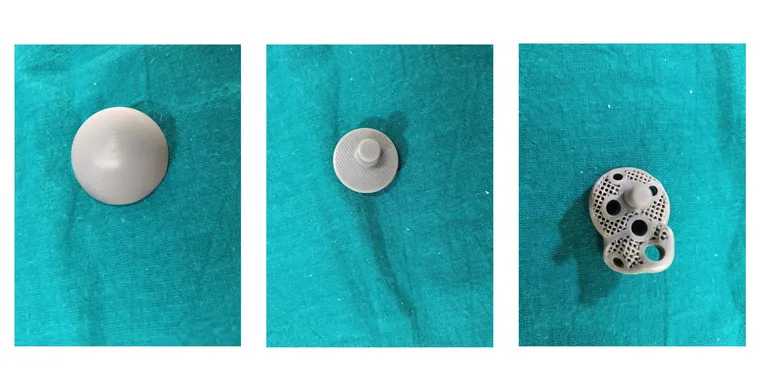
The patient-specific ReGlen implant was designed and manufactured to restore glenoid anatomy and provide a stable base for revision to reverse shoulder arthroplasty.
- Custom-fit geometry matching the native glenoid anatomy
- Porous lattice at bone-contact regions and over the central peg for osseointegration
- Central peg design providing primary stability and accurate positioning
- Locking screw configuration oriented toward maximum bone stock
- Compatible with standard glenosphere components
Patient-specific surgical guides
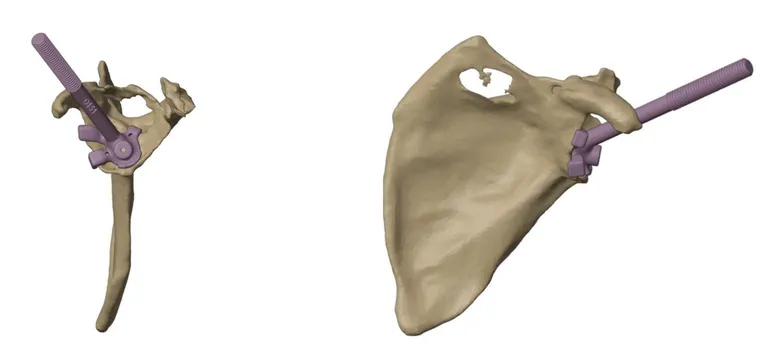
Dedicated patient-specific guides were developed as part of the solution. A glenoid axis guide assists in precise creation of the central hole for peg placement, and a separate locking screw guide ensures accurate pilot hole positioning and screw trajectory.
Post-op outcome
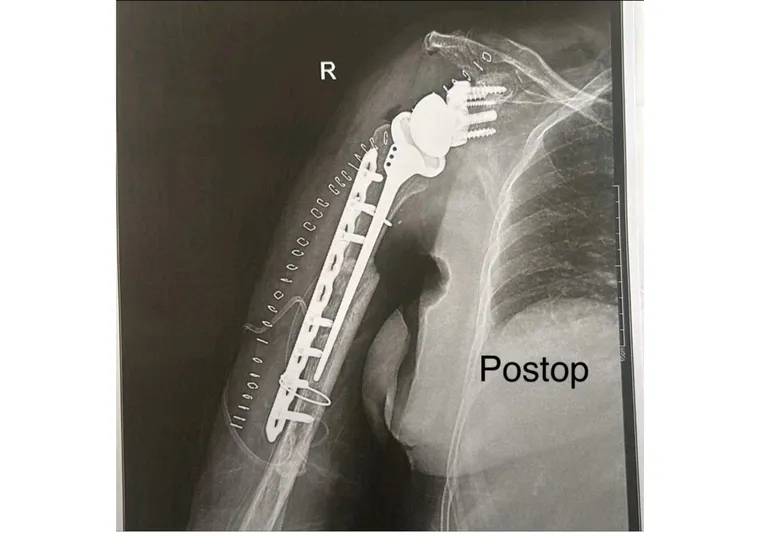
The custom ReGlen implant was successfully implanted, achieving stable fixation and accurate reconstruction of the glenoid anatomy. It fit precisely as planned, allowing secure attachment of the glenosphere and restoration of joint mechanics.
Early postoperative assessment demonstrated stable implant positioning, improved structural support and favourable conditions for bone integration.
Clinical impact
This case highlights the role of custom 3D-printed shoulder implants in complex revision scenarios with severe glenoid bone loss, where conventional implants are inadequate.
Related cases
 Shoulder
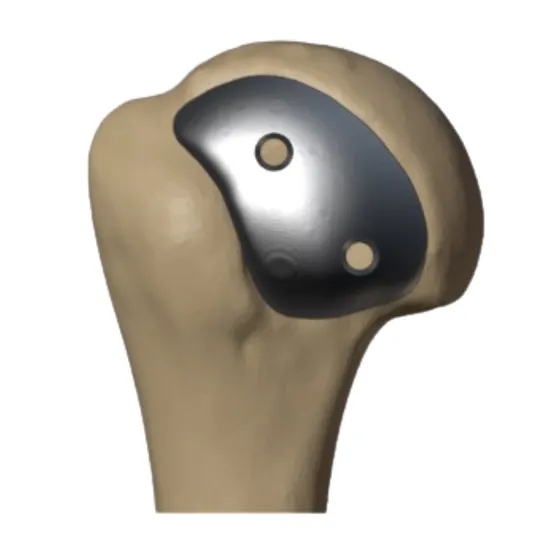
Custom Hill-Sachs Implant for Reconstruction of a Large Engaging Humeral Head Lesion
Patient-specific implant and drilling guide for a 22 × 41 mm humeral head defect
Read the case →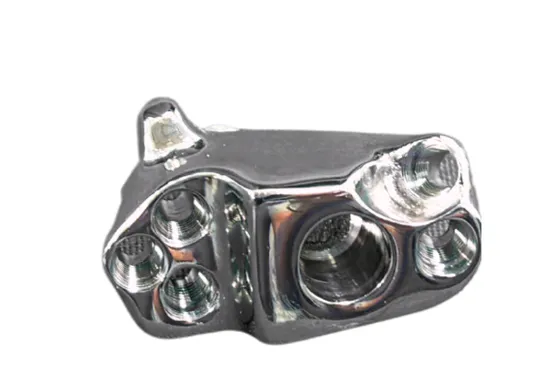 Shoulder
Reverse Shoulder Arthroplasty with a Patient-Specific Custom Glenoid Implant
ReGlen custom base plate for severe glenoid bone loss in rheumatoid disease
Read the case →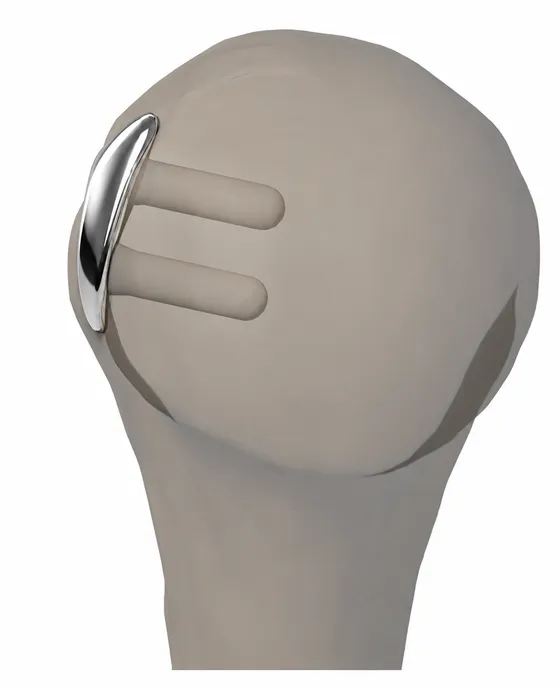 Shoulder
World's First Custom Implant for Hill Sachs Lesion
A pioneering “Fill Sachs” implant engineered to the patient's own humeral head curvature
Read the case →Have a case like this?
Send the imaging and the clinical question — first 3D visualisation back within 24 hours.