
Patient Specific Cranial Plate
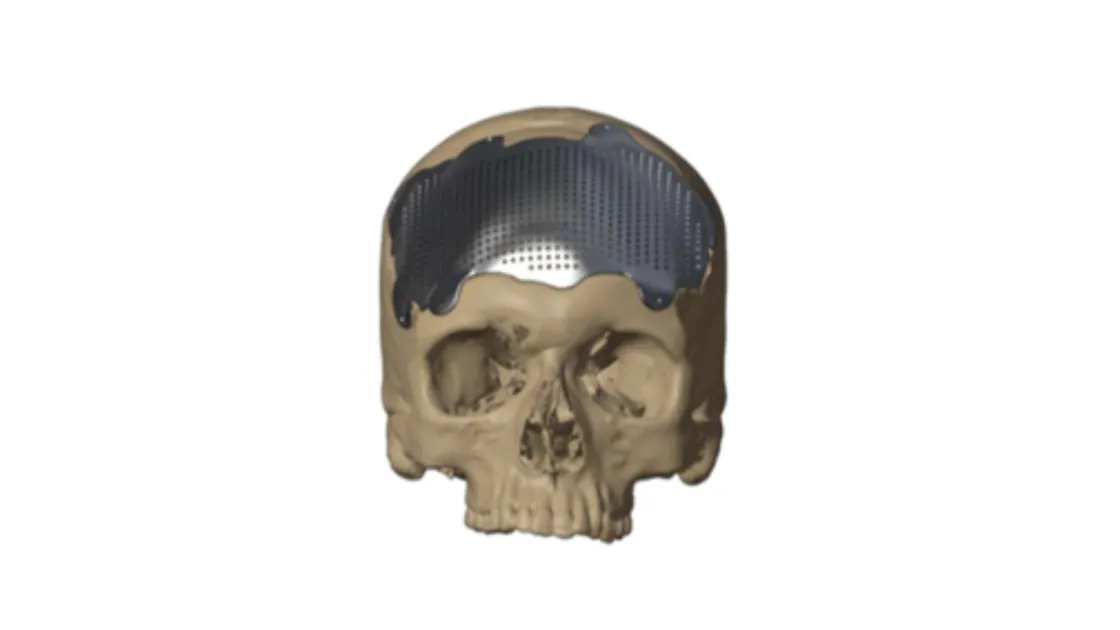
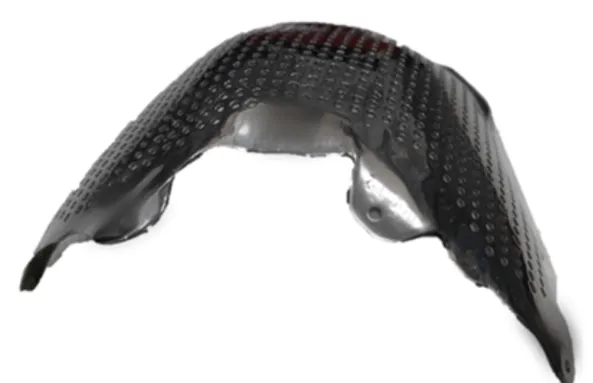
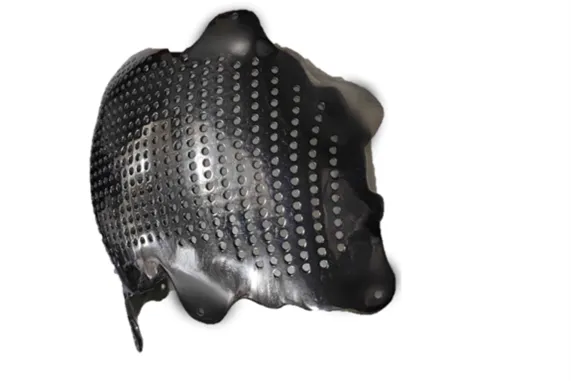
Titanium cranioplasty designed to the healthy skull curvature after right-side skull involvement
Case information
Cranioplasty is a surgical process to fix a deformity or defect in the skull caused by traumatic injury, medical-process injury or congenital issues.
An 18-year-old male patient was suffering from severe fever which had led to right-side paralysis. The right side of the skull was affected, and the surgeon decided to operate, planning to reconstruct the skull with a customised cranial plate.
The surgeon knew a customised implant would be the best option for this case, and approached our team to design the cranial plate for the patient.
Visualisation
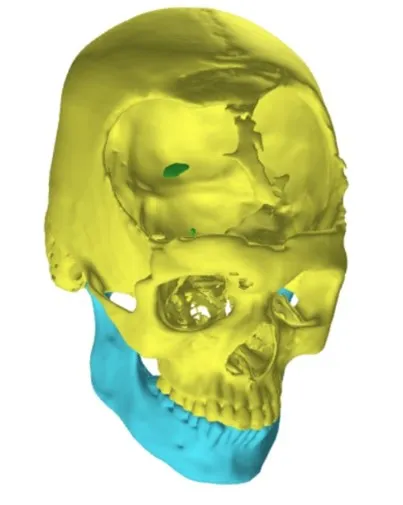
To visualise the cranial defect and the neighbouring bone, a high-resolution CT scan was used to convert the 2D scan into a 3D model. The region of interest was well captured and replicated as a 1:1 digital model for understanding the size of the defect, and the density and thickness of the bone.
Planning
We planned to design the prosthesis as close to the natural bone as possible in terms of curvature, thickness and weight.
- Referenced against the healthy skull curvature to derive the shape and curvature of the plate
- Proper registration of the model, keeping anatomical landmarks intact for better plate shape and size
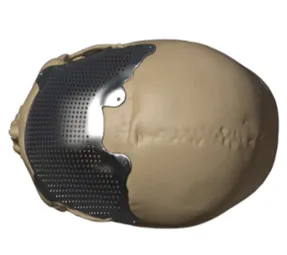
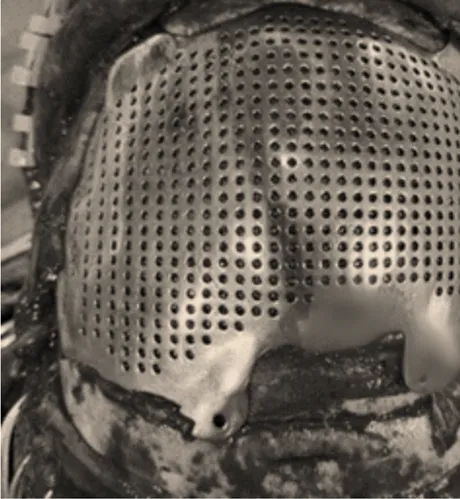
- Holes created on the surface to reduce weight and to help suture the skin flap
- Screw provision in the form of flange extensions on the plate for fixation to the skull
3D printing
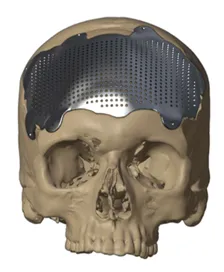
Once the implant design was finalised and approved by the surgeon, the customised cranial implant was manufactured using 3D printing in medical-grade titanium (Ti6Al4V) and used in surgery.
Conclusion
The use of the customised patient-specific implant helped achieve accurate reconstruction of the skull. It reduced intra-operative time and accelerated the patient’s recovery.
Related cases
 Cranial
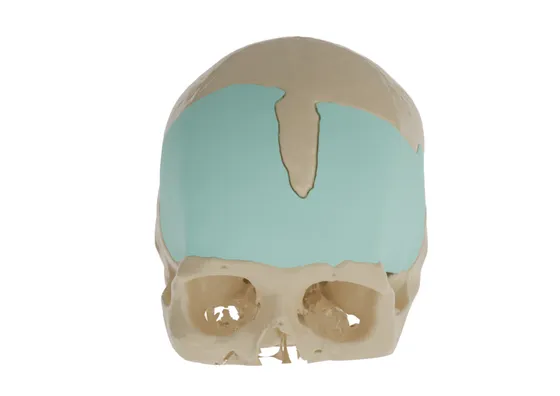
Precision Reconstruction in Frontal Defect with Customized PMMA Cranial Implant
Two-part PMMA cranial plate restoring frontal bone curvature after a previous reconstruction
Read the case →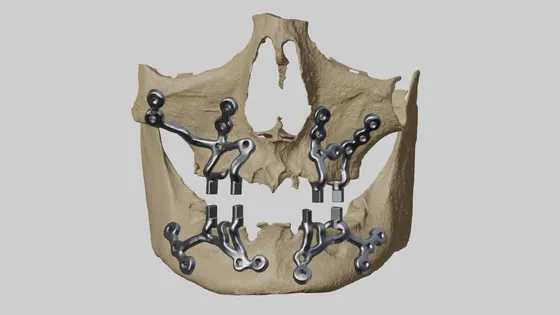 Jaw
JawCustomized Subperiosteal Implant
Peri-implantitis of maxilla and mandible in a 17-year-old, solved with custom titanium subperiosteal implants
Read the case →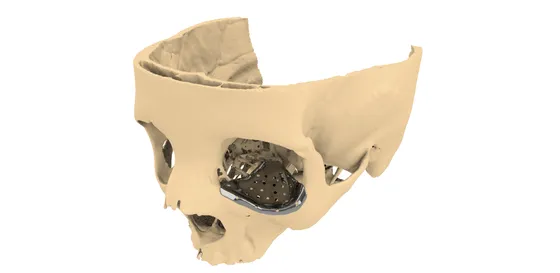 Orbit
OrbitComplex Orbital Implant
Orbital floor reconstruction mirrored from the healthy side with volume measurement
Read the case →Have a case like this?
Send the imaging and the clinical question — first 3D visualisation back within 24 hours.