
Advancing Precision in Revision Hip Replacement
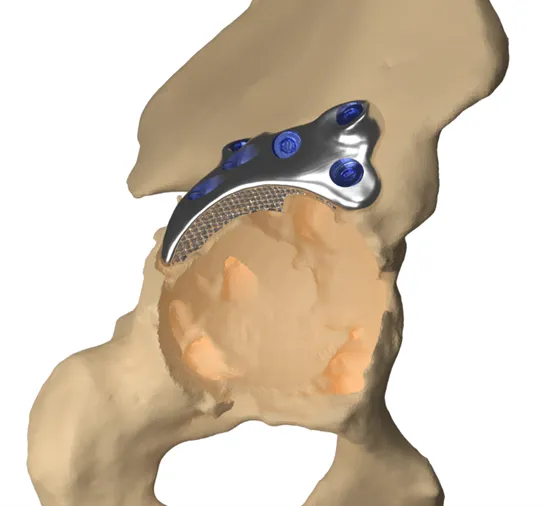
Custom hip columnar docking with divergent locking augment for a dislocated acetabular cup
Patient overview
A 31-year-old female patient presented with implant failure following a revision hip surgery. She was experiencing a dislocation of the acetabular cup implant, a complex issue that demanded a high level of surgical expertise and technical acumen.
Surgical approach
Executing a meticulous surgical strategy, the approach centred on resolving the dislocated cup implant through pre-operative planning on Jajal Medical’s digital surgical platform.
In collaboration with Dr. Vijay Bose, the surgical team aimed for optimal outcomes in revision hip surgery. The solution included a customised hip columnar docking with divergent locking augment, designed to address the specific challenges posed by the dislocated cup implant, ensuring a secure and precise fit.
3D-printed solution
Jajal Medical’s contribution extended into 3D printing, where a customised hip columnar docking with divergent locking augment was designed. This unique solution addressed the specific challenges posed by the dislocated acetabular cup implant, ensuring a secure and precise fit.
Technical insight
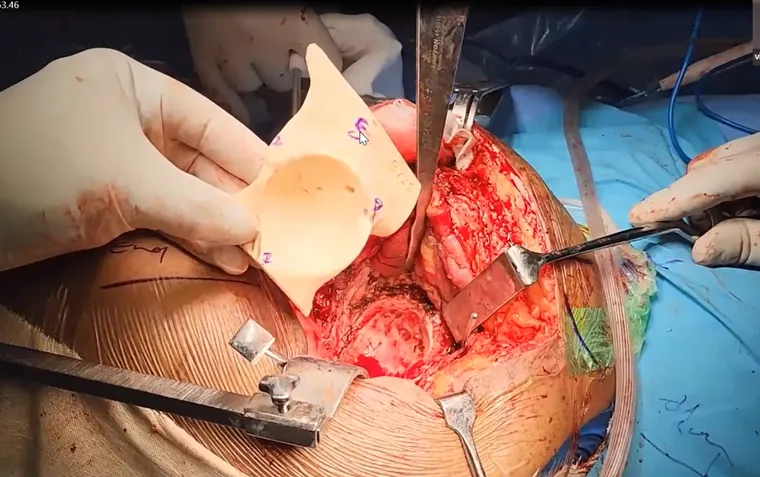
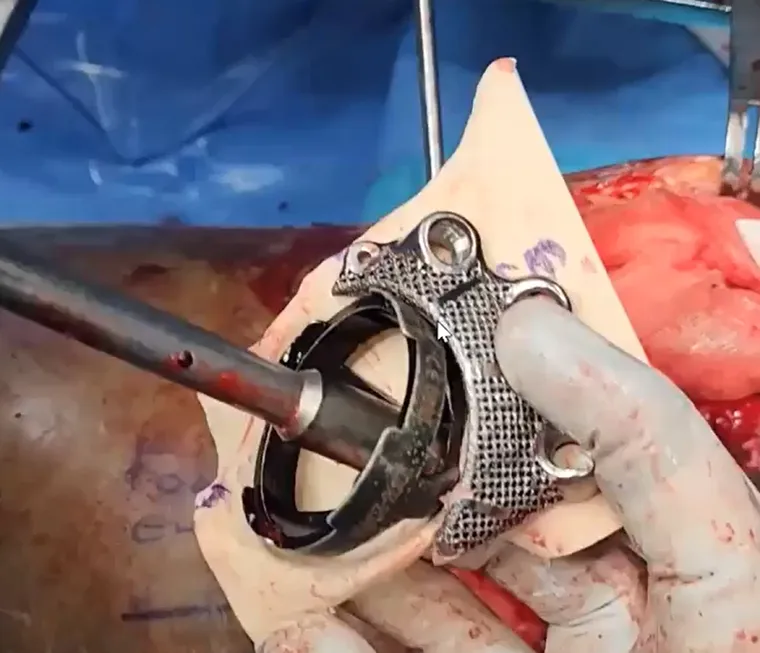
The post-operative success was attributed to the seamless integration of 3D planning and the tailored design of the hip columnar docking. The 3D-printed model played a pivotal role, offering a tangible representation during surgery and assisting in determining the optimal hip bone position.
The locking screws, exhibiting perfect fitment, highlight the technical excellence achieved in this complex revision hip surgery.
Outcome
Post-operatively, a detailed comparison with the initial planning phase revealed a promising result. The tailor-made hip columnar docking, steered by 3D planning and technical accuracy, led to a flawlessly integrated implant. The patient underwent a successful revision hip surgery, signifying a notable accomplishment in both surgical precision and the patient’s health.
Related cases
 Hip
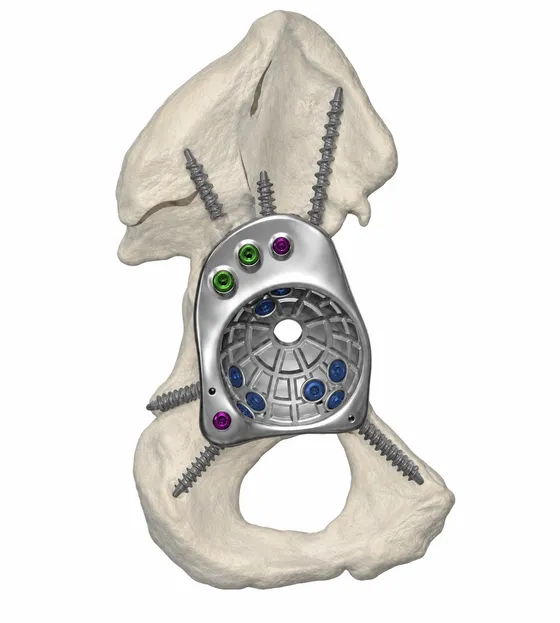
HipCustom FTL Cup for Complex Revision Hip Replacement
Massive anterior column bone loss reconstructed with a patient-specific FTL cup
Read the case →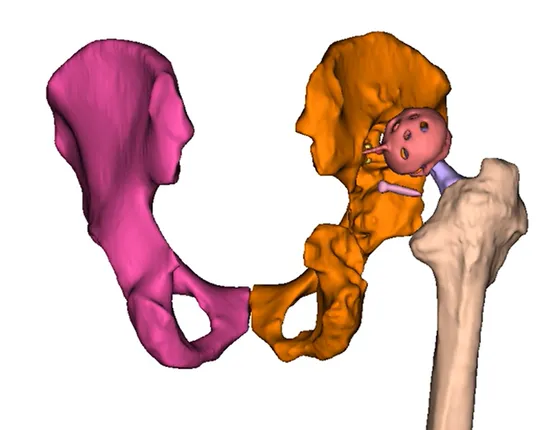 Hip
HipComplex Hip Revision
Ruptured medial wall and vertical hardware shift, segmented through heavy metal artifact
Read the case →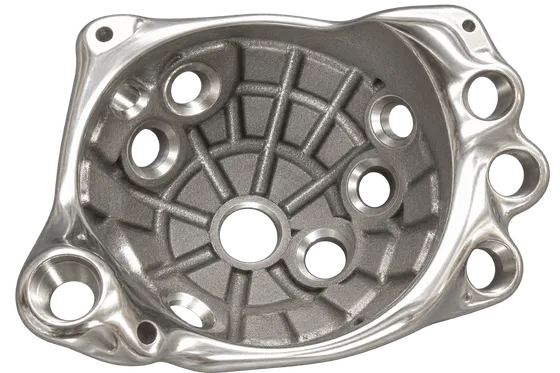 Revision hip
Complex Hip Revision with Severe Acetabular Bone Loss Using Patient-Specific FTL Cup
Multi-flange fixation for a deficient acetabulum
Read the case →Have a case like this?
Send the imaging and the clinical question — first 3D visualisation back within 24 hours.