

Pelvic Tumor Reconstruction Using Patient-Specific FTL Cup for Acetabular and Ischial Involvement
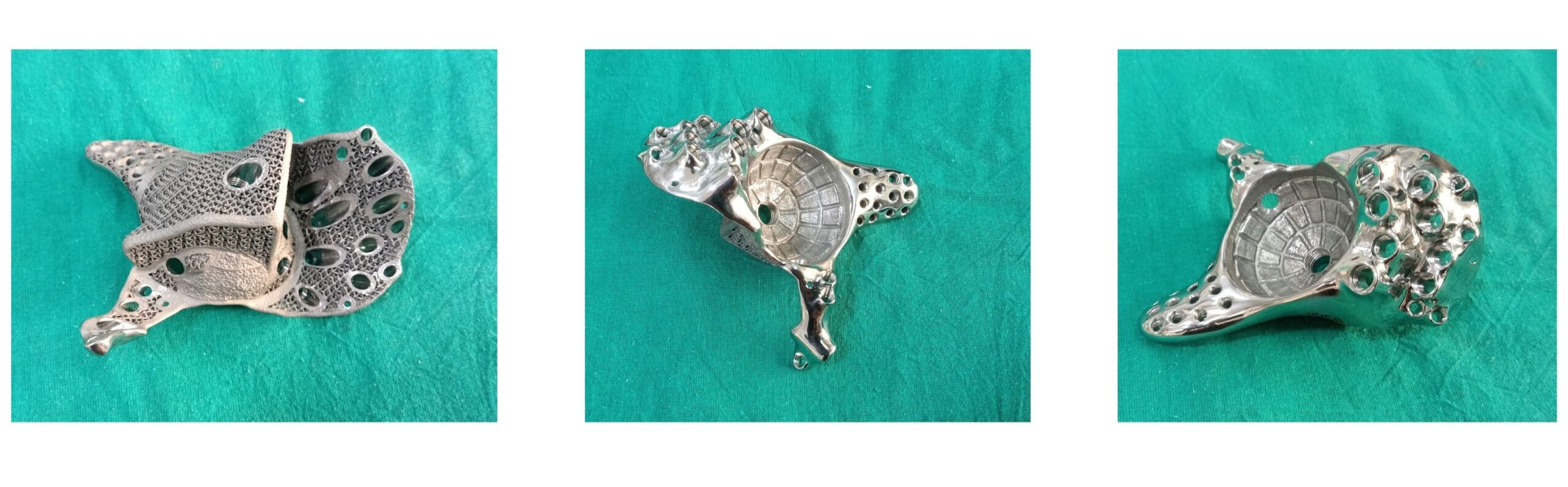
Patient Overview: A Complex Case Requiring Pelvic Tumor Reconstruction
A 31-year-old male was diagnosed with a tumor in the left pelvis, affecting both the ischium and acetabulum.
The tumor was identified as malignant and showed rapid progression, making timely and precise intervention critical.
Given the anatomical location and extent of involvement, no off-the-shelf implant solution was suitable, necessitating a patient-specific approach using a customized FTL Cup for pelvic tumor reconstruction.
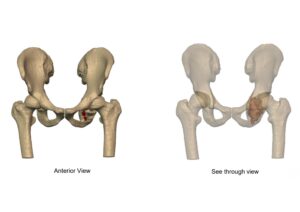
Preoperative Consideration: Planning Beyond Standard Solutions
The tumor’s presence in a structurally critical region of the pelvis meant that resection would directly impact both bone integrity and joint reconstruction.
This required careful planning to ensure:
- Complete tumor removal
- Preservation of viable bone
- Feasibility of implant fixation post-resection
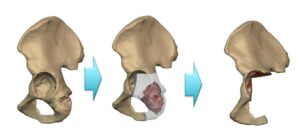
Surgical Planning: Defining Resection Strategy
The engineering team, in close collaboration with the surgeon, planned the resection cuts required to remove the tumor along with the affected bone.
This planning phase formed the foundation for both tumor clearance and subsequent reconstruction using a patient-specific FTL Cup.
Resection Execution Using Patient-Specific Jigs
To accurately execute the planned cuts intraoperatively, patient-specific resection jigs were designed and manufactured.
These jigs were used during surgery to:
- Guide precise bone resection
- Ensure alignment with the preplanned surgical approach
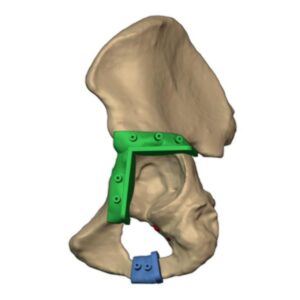
Custom Implant Placement: FTL Cup for Defect Reconstruction
Following tumor resection, a custom-made implant, designed as an FTL Cup, was placed to cover the resulting defect and support hip joint reconstruction.
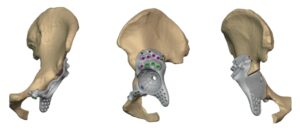
The FTL Cup was fixed using:
- Locking and compression screws at the ilium and pubis
- Suture holes at the ischial region for soft tissue reattachment
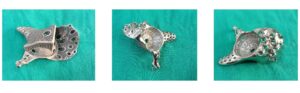
Guided Fixation Using Drilling Jigs
To ensure accurate screw placement, drilling jigs were used intraoperatively.
These guides enabled:
- Creation of pilot holes
- Alignment with preplanned screw trajectories
- Controlled and reliable implant fixation
Hip Joint Reconstruction: Completing the Procedure
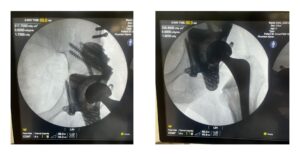
After secure fixation of the FTL Cup implant, the hip joint was reconstructed using:
- A standard cemented hip implant
- A femoral stem
This step restored joint articulation following tumor resection and reconstruction.
Clinical Significance: Role of FTL Cup in Pelvic Tumor Reconstruction
This case demonstrates the use of a patient-specific FTL Cup to manage a complex pelvic tumor involving the acetabulum and ischium.
The combination of planned resection, surgical jigs, and custom implant design enabled a structured approach to both tumor removal and reconstruction, addressing a case where standard solutions were not feasible.