

Patient-specific FTL CUP for Tumor Resection and Acetabular Reconstruction
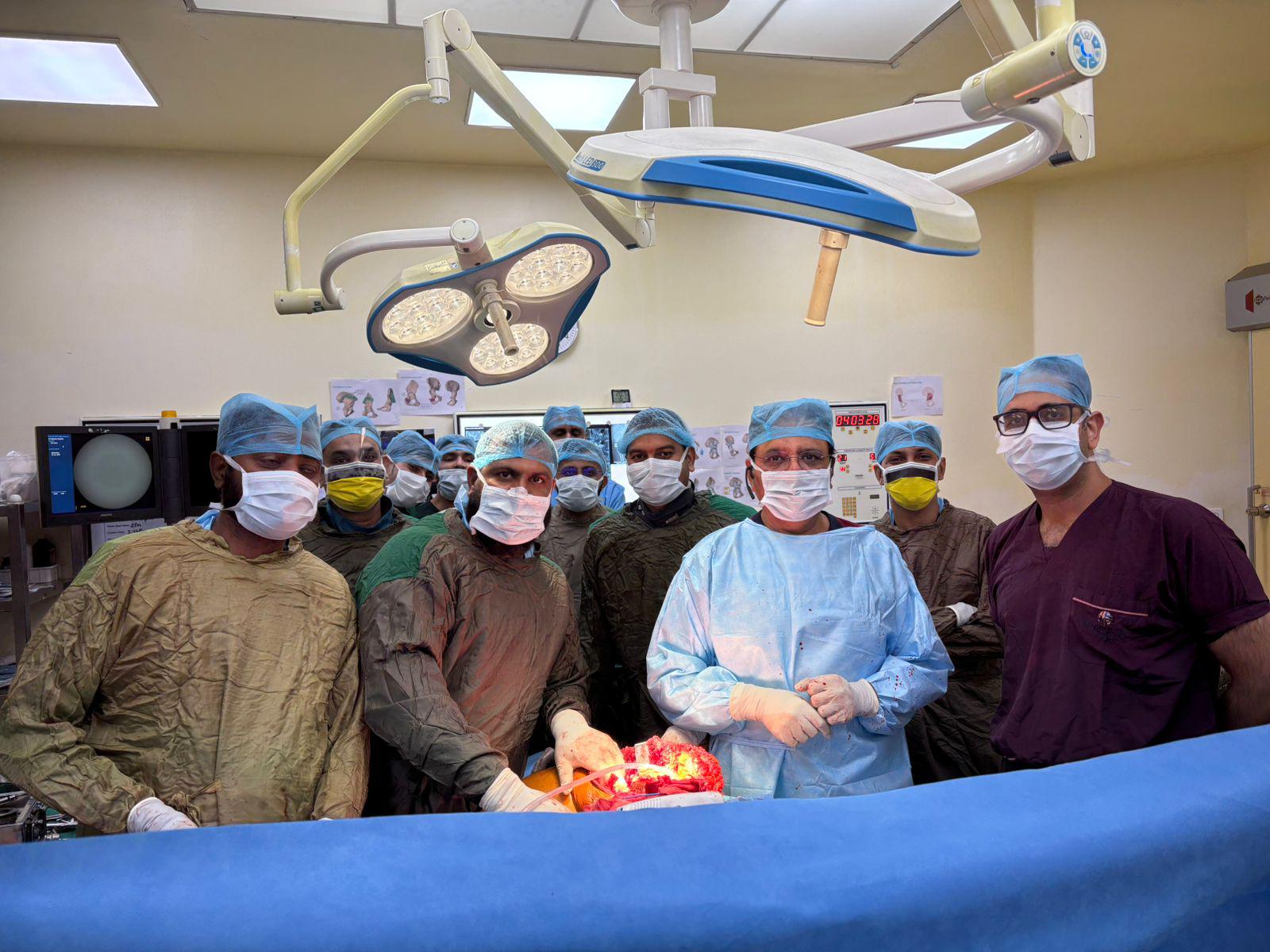
Patient Overview: Pelvic Tumor Case
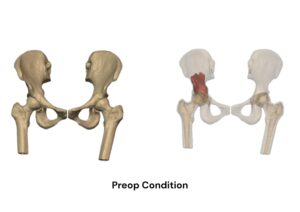
A 51-year-old female patient presented with a tumor in the right pelvis. Preoperative imaging revealed significant involvement of the acetabular region, raising concerns regarding structural integrity and postoperative joint reconstruction.
The nature and extent of the tumor were further evaluated in collaboration with the clinical engineering team to guide a precise surgical approach.
Clinical Challenge: Severe Acetabular Bone Loss After Tumor Resection
Tumor resection in the pelvic region, especially around the acetabulum, presents a significant reconstructive challenge.
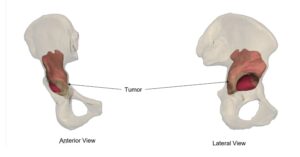
In this case, complete tumor removal required resection of a substantial portion of pelvic bone, resulting in a large acetabular defect, with the significant loss of the ilium bone. Conventional off-the-shelf implants were insufficient to restore pelvic anatomy, achieve stable fixation, or support long-term joint function.
Advanced Surgical Planning Using CT-Based 3D Segmentation
A patient-specific preoperative planning workflow was implemented to ensure surgical accuracy and predictability.
CT-based 3D segmentation enabled precise visualization of tumor boundaries and detailed assessment of residual bone stock.
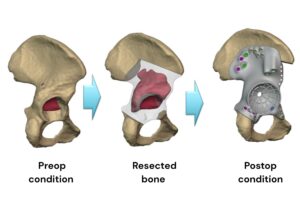
Based on this, optimized resection planes were defined to achieve complete tumor removal while preserving maximum healthy bone.
Patient-Specific Tumor Resection with Precision Cutting Guides
To accurately execute the surgical plan, patient-specific cutting guides (jigs) were developed.
These guides ensure precise bone cuts along predefined planes, minimizing intraoperative variability and enabling controlled tumor resection.
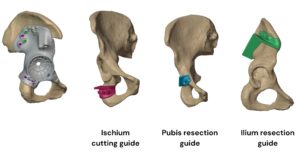
The cutting guides ensure seamless execution of the preoperative plan.
These patient-specific jigs enhanced surgical precision, reduced intraoperative uncertainty, and improved procedural efficiency.
Patient-specific FTL Cup Design for Acetabular Reconstruction
Following tumor resection, a patient-specific FTL cup was designed to reconstruct the acetabular defect and restore pelvic continuity.
The FTL cup featured a custom-fit geometry tailored to the patient’s post-resection anatomy, ensuring accurate defect coverage and anatomical alignment.
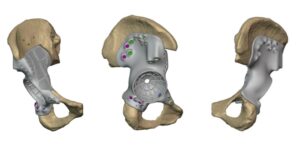
Fixation Strategy: Locking and Compression Screw Configuration
A robust fixation strategy was incorporated to achieve primary stability.
Locking and compression screws were strategically oriented toward regions of optimal bone stock, enhancing fixation strength and long-term stability.
Dedicated drilling guides were developed to enable precise pilot hole creation for screw placement.
These guides ensured accurate screw trajectory and positioning, reducing intraoperative guesswork and improving fixation reliability.
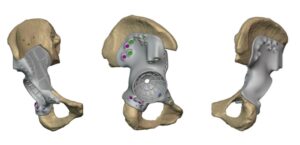
Moreover, the custom implant was designed to accommodate a standard cemented acetabular component.
This enabled reliable joint reconstruction using established implant systems while leveraging a patient-specific pelvic foundation.
Suture holes were incorporated into the implant to facilitate soft tissue reattachment.
This allowed secure fixation of surrounding muscles, contributing to improved joint stability and functional recovery.
Postoperative Outcome: Stable Fixation and Anatomical Restoration
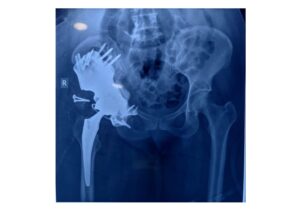
The custom pelvic implant (the FTL Cup) was successfully implanted following tumor resection, achieving stable fixation and accurate reconstruction of the acetabular region.
The implant demonstrated an excellent anatomical fit, restoring pelvic structure and enabling secure placement of the cemented acetabular component.
Early postoperative assessment indicated stable implant positioning and favorable conditions for functional recovery.
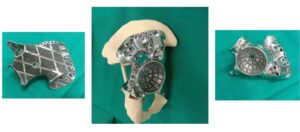
Clinical Impact: Advancing Pelvic Tumor Reconstruction with Custom Implants
This case highlights the critical role of patient-specific 3D-printed implants in managing complex pelvic oncology cases involving the acetabulum.
Through advanced imaging, precise planning, and customized implant design, a highly personalized solution was achieved, enabling complete tumor resection, restoring anatomical integrity, and ensuring stable reconstruction.
This approach expands the scope of limb-salvage surgery and reinforces the value of custom implants in next-generation orthopedic care.