

Complex Hip Revision with Severe Acetabular Bone Loss Using Patient-Specific FTL Cup
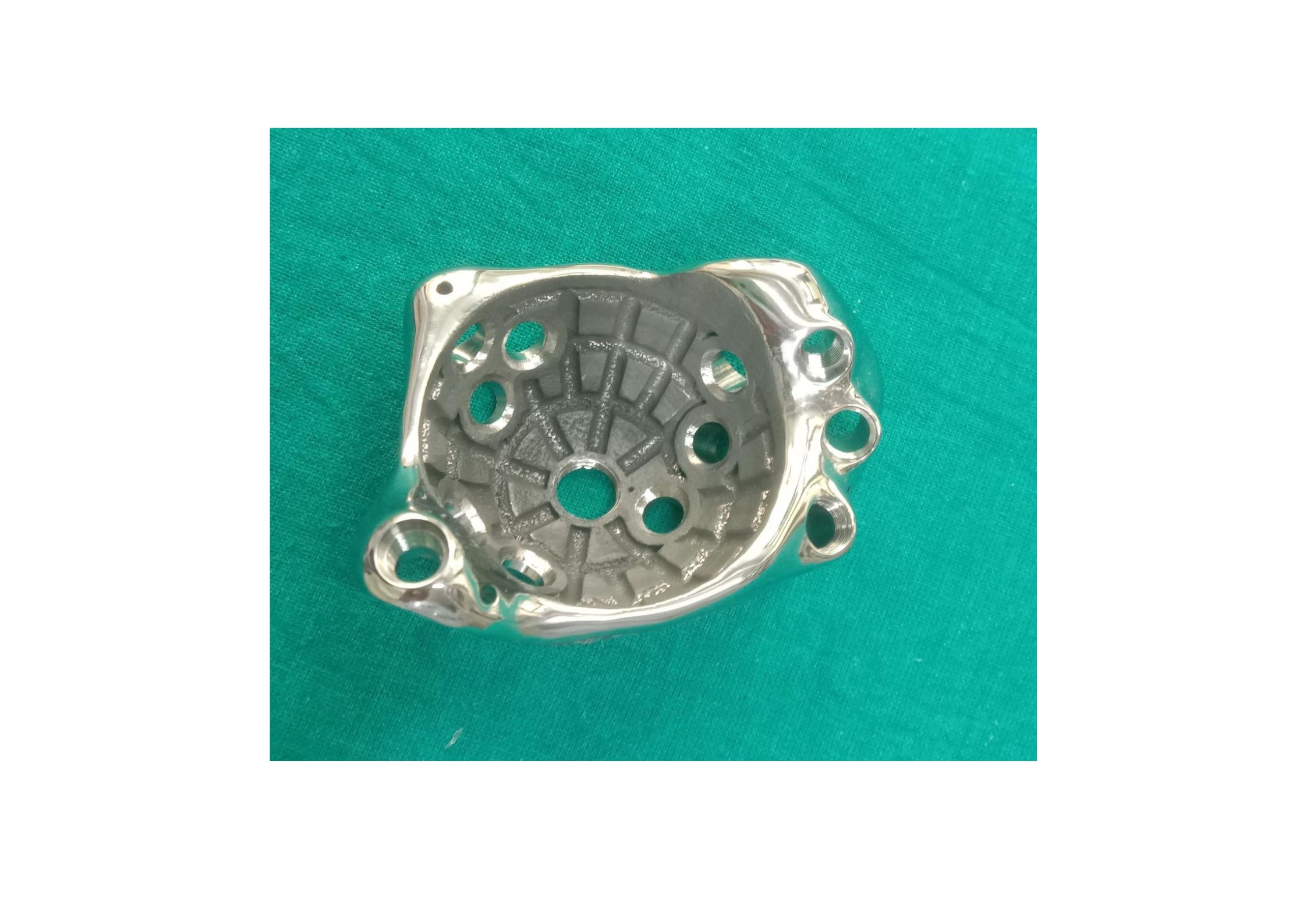
Patient Overview: Complex Hip Revision Case with Prior Implant Removal
A 48-year-old female patient presented with a history of left-sided primary hip replacement. A subsequent revision surgery was performed to remove implants from the acetabulum and femur, following which bone cement was placed within the cavity.
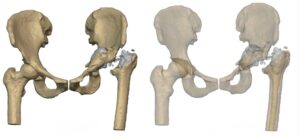
The right hip joint was healthy. The left pelvis showed significant structural defects requiring reconstruction.
Preoperative Assessment: Severe Acetabular Bone Loss with Column Deficiency
CT imaging of the left pelvis revealed:
- Loss of the medial wall of the acetabulum
- Absence of the posterior column
- Fracture in the anterior column
- Intact superior pubic ramus and ischium
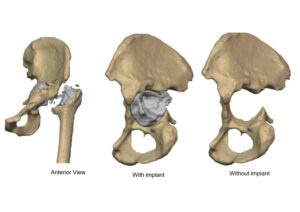
These findings indicated a complex acetabular defect with compromised structural support.
CT-Based 3D Surgical Planning for Hip Reconstruction
A CT-based 3D planning workflow was used to evaluate the defect and assess the available bone structure.
Based on this assessment, a patient-specific implant solution was developed by JMS team to address the defects and support reconstruction.
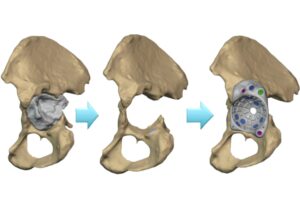
Patient-Specific FTL Cup Design confirmed for Acetabular Defect Management.
A customized FTL (Flanged triaxial locking) Cup was designed for this patient to cover the acetabular defect and facilitate load transfer.
Key Design Features of Custom 3D-Printed FTL Cup Implant
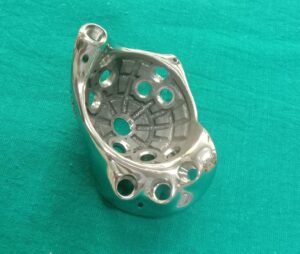
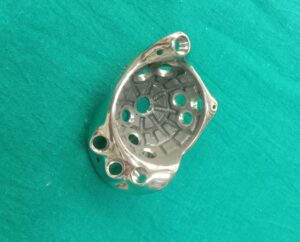
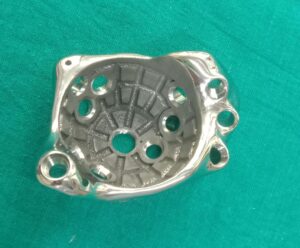
- The FTL cup was designed to match the defect and provide coverage of the acetabular region
- Three flanges were incorporated, extending to the pubis, ischium, and ilium to support fitment and load transfer
- Inclination and version angles were built into the implant design
- Clearance was provided in the implant to account for the surrounding soft tissues
- The diameter of the cup was defined to fill the defect and accommodate a standard cup/liner
- JMS Team has designed the FTL cup to be secured using locking and compression screws
Implantation Strategy: Multi-Flange Fixation for Pelvic Stability
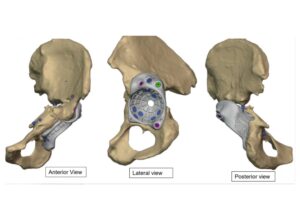
The FTL cup was positioned to cover the defect and achieve fixation against the pelvic bone.
Locking and compression screws were used to secure the implant in place.
Postoperative Outcome: Stable Fixation After Complex Hip Revision
The implant was successfully placed in the appropriate position.
Postoperative imaging confirmed coverage of the defect and implant fixation.
Clinical Impact: Role of Patient-Specific Implants in Hip Reconstruction
This case demonstrates the application of a patient-specific FTL cup in managing a complex acetabular defect.
The use of CT-based planning and a customized implant enabled precise reconstruction in the presence of significant bone loss and structural deficiency.
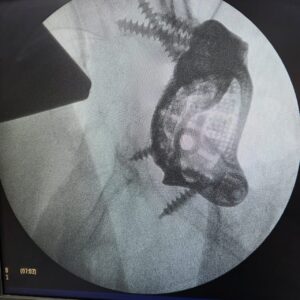
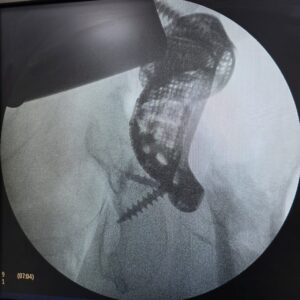
Post-operative outcomes indicated stable implant positioning and enhanced functional recovery, supporting the clinical value of patient-specific solutions in complex hip reconstruction cases.